Start With the Seat: Building a Garden Outward From One Chair
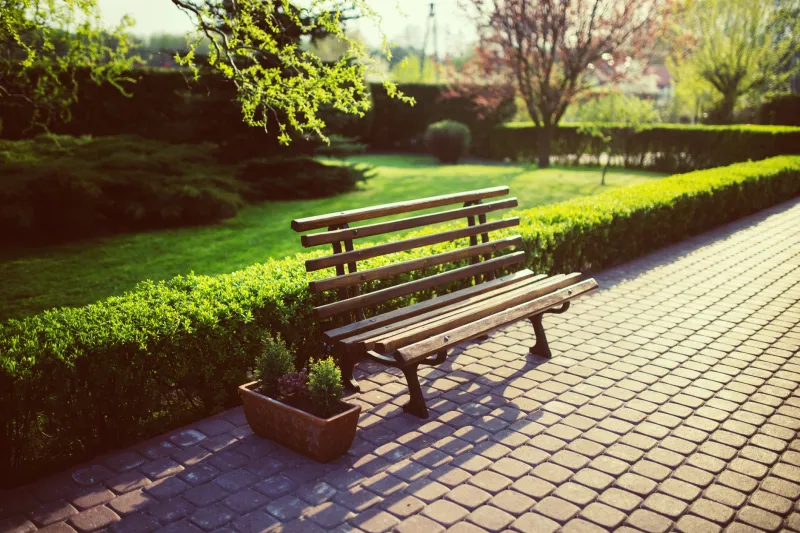
Most gardens get planned in the order we look at them. Lawn first, because it's there. Borders second, because the beds are already dug. Fence last, because it's a job rather than an idea. And then, somewhere near the end, a bench gets squeezed into whatever rectangle of space survived the process — usually facing a shed, usually in shade by four o'clock.
Flip that around and something interesting happens. Choose the seat first and the rest of the garden stops being a set of separate projects and starts being a set of answers to one question: what does this seat need in order to be used?
Why one seat beats five
A garden with a bench here, a bistro set there and a lounger folded against the wall is a garden with no centre. Nothing is quite comfortable enough to become a habit, so you drift indoors instead.
One good seat, properly sited, does something different. It creates a destination. Paths have somewhere to go. Planting has a viewing angle. The boundary behind you has a job — blocking wind, hiding the neighbour's trampoline, holding a bit of sky. You stop thinking about the garden as a list of areas and start thinking about it as a route to a place you want to be.
It also makes decisions easier. When you're standing in the middle of a lawn with a sketchbook, everything is possible and nothing is decided. When you're designing for a specific chair in a specific corner, half the choices make themselves.
Four things to test before you commit to a spot
Sun, as a moving thing rather than a photograph
A corner that's glorious at eleven in the morning can be grim at four. Before you settle, spend a Saturday watching where the sun actually lands — not where you assume it lands. In the UK, a south-facing seat is the obvious answer, but a west-facing one is often better in practice, because it catches the part of the day when you're actually home and free.
Remember that the sun is low for a big chunk of the year. A seat that's shaded by the house from October to March is fine if you only use it in summer, and quietly depressing if you don't.
Shelter, and which way the wind comes from
We get the prevailing south-westerlies, which means the wet and the wind usually arrive together. A seat tucked behind a hedge, a shed or a house wall will be usable on days when an exposed one isn't. This is genuinely the difference between a bench you sit on twenty times a year and one you sit on two hundred times a year.
If you can't get hard shelter, planting will do a lot. A mixed hedge or a dense block of evergreen shrubs, positioned so it filters rather than blocks, takes the sting out of wind without turning the seat into a stale pocket.
Privacy, honestly assessed
Work out the sightlines before the leaves come off the trees. Somewhere overlooked in February is overlooked for five months of the year, and a seat that feels watched is a seat that doesn't get used. Quick fixes — a taller fence panel, a pleached tree, a well-placed shrub — are worth doing at the design stage rather than after the first summer of not sitting there.
The view, from seated height
This one gets forgotten constantly. Everything looks different from 45cm off the ground. Things you notice standing up — a wonky fence line, a messy corner, the bins — may be invisible from the bench, while a shrub that seems modest at eye level suddenly fills the whole frame.
Take a folding chair out, sit down, and look properly. Photograph it. That photograph is your design brief.
Then build outward
Once the seat is fixed, the paths have a purpose. They don't need to be grand — a mown strip, a line of stepping stones, a gravel run — but they should make the seat reachable without a decision. In wet weather, a firm, mud-free route matters more than a beautiful one, particularly if the seat is at the far end of a clay-heavy garden.
Next, planting. Think in layers measured from the chair. Low things close by, so they don't block the view when you're sitting. Mid-height things at the sides, framing rather than screening. Taller structure behind and beyond, giving the seat a sense of enclosure and something to look at through the seasons.
And be honest about scent and sound. A seat near a lavender edge, a climbing rose or a patch of herbs gets used more, because sitting there is doing something rather than just being outside.
Give the boundary behind you a job
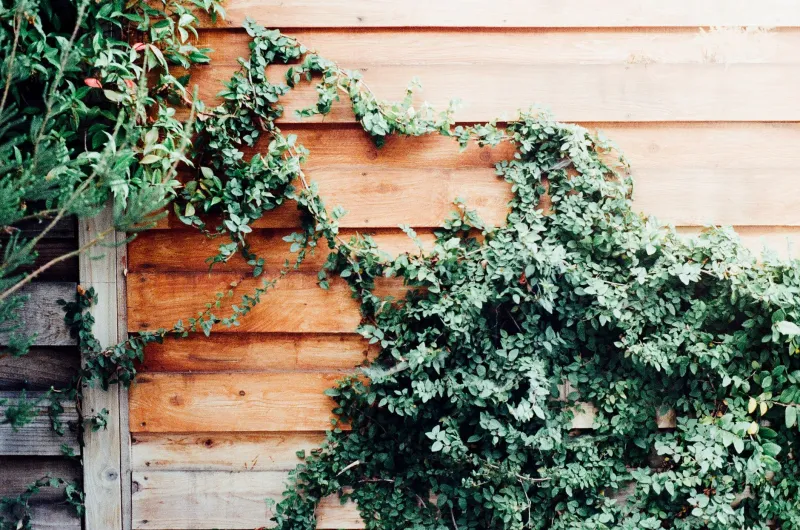
If your seat faces into the garden, the fence or hedge behind it is doing structural work — shelter, privacy, backdrop. That's a licence to make it plain and let the planting in front do the talking.
If your seat faces outward, the opposite applies: the boundary becomes the view, so it needs to be worth looking at. That might mean a decent hedge, a bit of well-built fencing, or a carefully framed gap. Either way, it's a decision rather than an accident.
The winter test
The real measure of a garden built around a seat is whether you'd still go out there in January. Not for an hour — for five minutes with a mug of something hot. If the answer is yes, you've got the sun angle, the shelter and the view roughly right.
If the answer is no, it's usually one of three things: the seat is in the wrong place, the path is unwelcoming in the wet, or there's nothing to look at once the herbaceous stuff has collapsed. All three are fixable, and all three are much easier to fix now, at the drawing stage, than after the paving's been laid.
Start with the chair. It's a small act of confidence, and it changes everything downstream.