The Unseen Border: Tuning Your Garden’s Soundscape, Zone by Zone
Most garden design conversations start with what you can see: the layout, the planting, the colour, the view from the kitchen window. Sound tends to arrive later, if at all. Yet a garden is never silent. It has a soundscape whether you design one or not, and that soundscape does a lot of quiet work in the background. It can make a small plot feel calm, a busy street feel softer, or a perfectly nice patio feel exposed and restless.
The good news is that sound is one of the more forgiving parts of garden-making. You do not need a grand plan or a huge budget. You need to listen properly, decide what kind of mood each part of the garden should carry, and then use water, plants and surfaces to nudge the experience in the right direction.
Start by listening, not looking
Before moving a single pot, spend ten minutes in the garden at different times of day. Morning, late afternoon, a weekday, a weekend. Note what dominates. Is it road noise, a neighbour’s extractor fan, a railway line, children’s voices, a distant delivery van, wind rattling a fence panel? Is there any birdsong, or does the garden feel acoustically flat?
This is not about chasing total silence. A completely silent garden in a UK town is rare, and a slightly sterile one is not necessarily restful. The aim is to create a soundscape that feels layered and deliberate. Some noise will always be there. The question is whether it is the sound you notice first.
It also helps to map the garden by ear. The spot by the back door may be loud and bright. The far corner may be muffled. The side return may funnel sound in a way that surprises you. Once you know where the acoustically difficult spots are, you can stop treating the whole garden as one room and start designing it as a series of smaller ones.
Mask, don’t drown
Water is the classic sound-masking tool, but it is easy to overdo. A fountain that roars is not relaxing; it is a competing noise. The trick is to place water where it adds a consistent, soft texture that takes the edge off traffic or neighbourly clatter without becoming the main event.
For a small urban plot, a wall-mounted spout, a pebble pool or a narrow rill can work better than a large fountain. Position it between the main seating area and the source of the noise you want to soften. The sound should sit behind conversation, not over it. If you have to raise your voice near the water, it is doing too much.
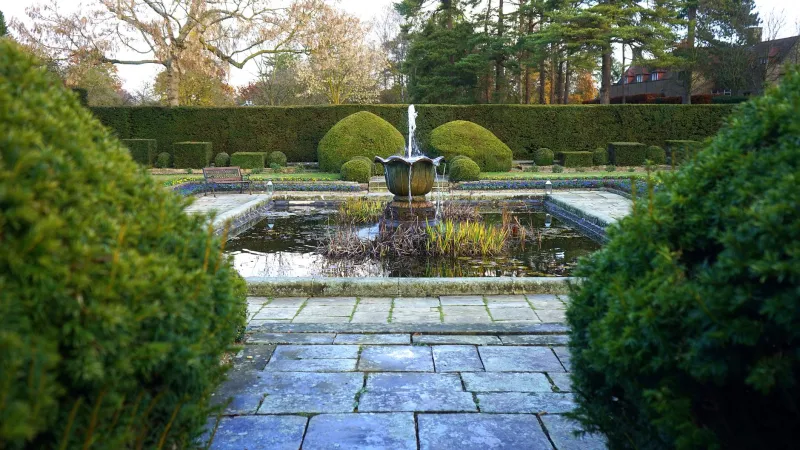
In larger gardens, you can use water more strategically. A rill can draw sound along a path and make a transition between zones. A small pond with a gentle spillway can create a local sound pocket in a quiet corner. A fountain placed at the centre of a patio can become a social anchor, but it will also make that area livelier. That is fine, as long as the liveliness is intentional.
Think, too, about maintenance. A water feature that needs constant topping up or sounds like a cistern refilling will undo the benefit. Keep it simple, keep it clean, and make sure the pump is accessible.
The ground talks
We tend to think of paths and patios as visual choices, but they are acoustic ones too. Gravel underfoot brings a crisp, responsive crunch. Timber decking can sound hollow. Stone flags are quieter and cooler underfoot. Bark chip softens footsteps but can feel informal. Each surface sets a different tone before anyone has said a word.
This matters most in small gardens, where every square metre is close to the house and close to the seating. A gravel path outside a bedroom window may sound charming at 3pm and less charming at 7am. A loose gravel surface in a front garden can make an arrival feel cheerful and audible; the same surface in a quiet back corner may be exactly wrong.
Use surface changes to mark transitions. A quieter material near a seating area can signal that the garden has shifted gear. A crunchier path can lead you towards a working area or an edible plot, where a little activity is part of the point. The ears pick up these changes quickly, even if the eyes are busy elsewhere.
Planting for rustle and chatter
Plants are not just visual screens. They are acoustic ones, and they bring movement and texture to the soundscape. Dense hedges and multi-layered borders can absorb and deflect some noise, especially when they are evergreen and planted close to the boundary. They will not silence a main road, but they can take the hard edge off it.
Then there are the plants that make their own sound. Ornamental grasses are the obvious choice: deschampsia, miscanthus, stipa and hakonechloa all move in the breeze and bring a soft, papery rustle. Birch foliage has a light, shimmering quality. Bamboo can sound almost tropical in the right spot, though it needs careful containment. Even a few well-placed grasses near a bench can make a still afternoon feel less static.
Bird-friendly planting adds another layer. Berries, seedheads and dense cover bring in blackbirds, tits, sparrows and the occasional wren. Ivy on a fence, hawthorn or rowan at the boundary, teasel and sunflower seedheads left over winter, a small crab apple: these are practical moves that also happen to sound good. The result is not a constant chorus, but a garden that feels inhabited.
Be careful with wind chimes and other decorative sound-makers. One can be charming; five can feel like a car alarm in a gift shop. Use them sparingly, and place them where their sound will drift rather than dominate.
Build a quiet room
A quiet corner rarely happens by accident. It usually needs enclosure, a comfortable seat, and a deliberate reduction in hard, clattering surfaces. Think of it as a small outdoor room with its own acoustic identity.
Use planting to wrap the space: a hedge behind the seat, taller perennials or shrubs to the sides, a tree canopy overhead if you have room. Choose a seat that does not scrape or squeak every time you move. Add a cushion, a small side table, perhaps a rug or a patch of softer paving. The aim is not total silence but a sense of being held.
Orientation matters too. If the quiet corner faces the noisiest part of the garden, it will never feel quiet. Put the seat where the sound is behind you, or where a hedge, shed or planted screen breaks the line of sight to the noise source. In larger gardens, a quiet corner can sit further from the house and be reached by a path that gradually softens underfoot. In smaller gardens, it may simply be the end of the patio nearest the planting, with a screen of grasses and a small water bowl to blur the edges.
Small plot, big sound
In a small urban garden, sound design is mostly about editing. You cannot move the road, but you can change what happens between you and it. A dense evergreen hedge at the boundary, a wall spout near the seating, a gravel path kept away from bedrooms, a few pots of rustling grass: these small moves add up.
Avoid filling every surface with hard materials. Too much paving, fencing and metal furniture creates a bright, echoing space. Introduce softer elements where you can: timber, planting, fabric, even a patch of lawn or a bed of low groundcover. The garden will feel calmer before you have added a single cushion.
Larger gardens, more layers
With more space, you can be more deliberate about zones. A lively patio near the kitchen, a rustling grass border along a path, a quieter seat behind a hedge, a small pond or rill marking the transition. The aim is not to make every area silent. It is to give each area a distinct acoustic character, so moving through the garden feels like moving through different rooms.
This is where a garden transformation can be quietly clever. The visual changes get the attention, but the sound changes are what make the space feel resolved. A garden that looks good and sounds unsettled will always feel slightly unfinished. A garden that looks good and sounds right tends to stay with you.
A final ear test
Before you call a garden finished, sit in it without your phone. Listen for five minutes. Is there anywhere that feels harsh, exposed or oddly tense? Is the water feature competing with conversation? Does the gravel path announce every visitor to the whole house? Are there any pockets of true quiet, or just pockets of less noise?
If something feels off, the fix is often simple: move the fountain, soften a surface, add a screen of planting, or shift a seat. Sound is not a garnish on top of the design. It is part of the structure. Get it right, and the garden will feel calmer, more generous and more complete, even if nothing visible has changed at all.