Blank Canvas, Real Ground: A First-Year Plan for a New-Build Garden
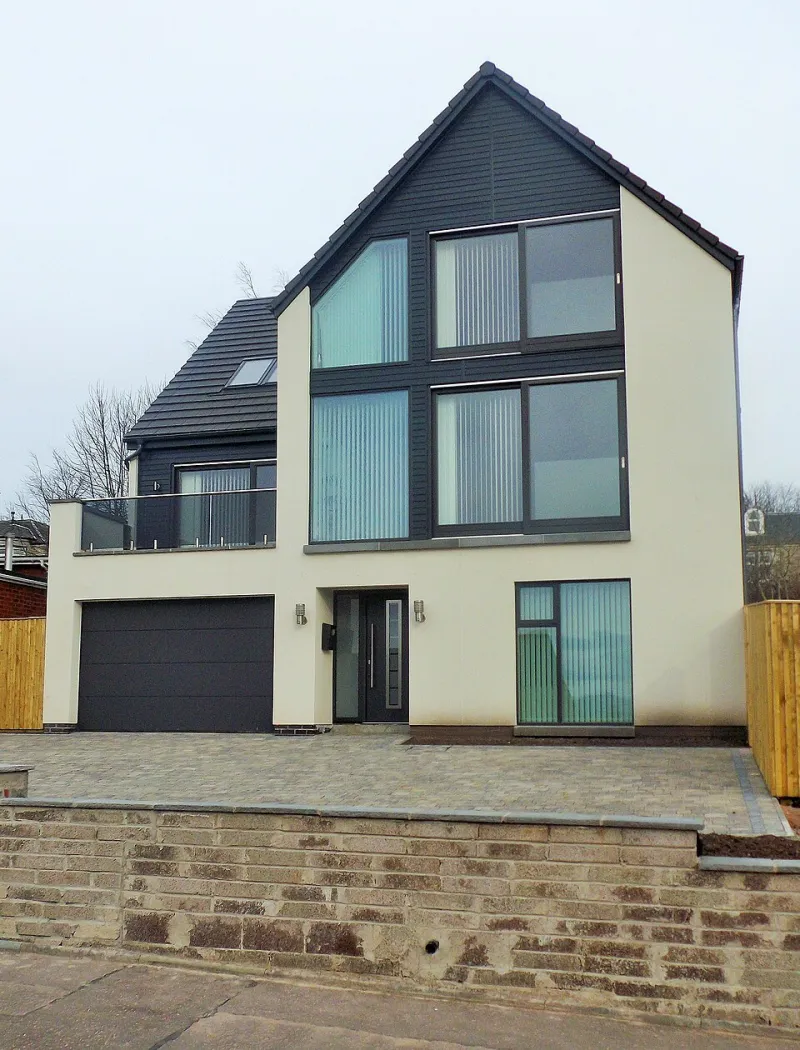
Photo: Stanley Howe , CC BY-SA 2.0, via Wikimedia Commons
New-build gardens have a reputation problem. They are often described as blank canvases, which sounds generous until you try to plant one. Under the turf there is usually compacted subsoil, a scattering of builder's rubble and a topsoil layer that has been spread rather than improved. The boundaries are close, the neighbours are visible and the house has just been finished. It is not a clean slate; it is a construction site with a lawn on top.
That is not a reason to despair. It is a reason to slow down. The first year in a new-build garden is not about filling every border. It is about fixing the ground, establishing the bones and choosing plants that can survive the conditions they will actually meet. Do that, and the garden starts to look deliberate rather than rushed.
Live with the plot before you dig
Before you buy a single plant, spend a few weeks watching the garden. Where does the sun sit at lunchtime? Which corner catches the wind? Where does water collect after rain? Where do you naturally walk from the back door to the bin store? Which window looks straight into next door's kitchen? These observations are more useful than a mood board, and they cost nothing.
Check what is under the turf. Lift a corner with a spade. Is the soil dark and crumbly, or pale and compacted? Are there bricks, plastic, hardcore? A new-build plot can have a thin layer of topsoil over almost anything. If the soil is waterlogged in winter and cracks in summer, you may have heavy clay; if it drains instantly, it may be sandy or stony. Both can be improved, but you need to know what you are working with.
Repair the soil first
Soil is the part of a new-build garden that is easiest to ignore and most expensive to fix later. Compacted ground needs air and organic matter. Do not dig wet clay; you will make it worse. Instead, work in compost or well-rotted manure when conditions are right, and mulch beds every autumn. If the whole garden is compacted, start with one border. A single generous bed, properly improved, will teach you more than a whole garden of starving plants.
Builder's rubble is a common find. Remove what you can from the top layer, but do not try to sieve the entire plot. Raise beds if drainage is poor, or choose plants that tolerate the conditions. A soil test will tell you the pH and nutrient levels, but the most important test is simple: squeeze a handful. If it stays in a tight ball, it needs organic matter and improved structure.
Privacy before pretty
Overlooked boundaries are one of the defining problems of new-build gardens. The quickest solution is a fence, but check the height rules and talk to neighbours before you build. A mixed native hedge — hawthorn, blackthorn, field maple, hazel — will take a few years but gives privacy, wildlife and a softer line than close-board fencing. For year-round cover, consider yew or holly, though they are slower. A trellis with climbers can screen a specific view while the hedge grows.
Structure comes next. Paths, seating areas, a shed, a bin store: these are the bones of the garden. They make the space feel intentional even before the planting fills out. A simple path from the back door to a bench, with a border on each side, will do more for a new-build garden than a scattering of pots. Use vertical space too: climbers on a fence, a small tree for canopy, a pergola over a patio. The aim is to break up the rectangle and create a sense of enclosure.
Choose plants that can take it
New-build gardens are often exposed, windy and free-draining or waterlogged, depending on the soil. Choose plants that are tough and adaptable rather than tender and demanding. Shrubs such as Viburnum, Choisya, Osmanthus and Cotoneaster will establish quickly, though check local advice on invasive species. Perennials such as Geranium, Nepeta, Salvia and Rudbeckia are reliable and pollinator-friendly. Bulbs are cheap, generous and forgiving.
Native and near-native plants are a good bet because they are adapted to UK conditions. If the soil is poor, start with plants that tolerate it rather than trying to change the entire plot in one season. Plant in autumn or spring, water through the first two summers, and mulch. Do not crowd the plants; they need air and room to grow.
Phase the plan
A new-build garden is best done in phases. Year one: improve the soil, put in the boundaries, lay the main path, create one seating area and plant one border. Year two: add a lawn or meadow, more borders and a tree. Year three: refine, fill gaps and add the details. This is not a failure of ambition; it is how gardens actually establish.
Use pots and annuals for instant colour while the permanent planting grows. They are not a cop-out; they are a holding pattern. Spend your budget on soil, structure and trees first. Save the instant bedding for later, when you know how the garden behaves.
The lawn question
Developer turf is often thin and laid on poor ground. Decide whether you actually want a lawn. A small lawn is useful for children and pets, but a gravel garden, a meadow strip or a planted border may suit the space better. Do not keep grass simply because it was there when you arrived. The best new-build gardens are the ones where the owner has asked what the plot needs, not what the developer left.
The long game
A new-build garden will not look finished in a year, and that is fine. The first year is for roots, soil and structure. The second is for filling out. The third is for editing. By then, the hedge is thickening, the tree is settling and the borders are starting to knit. The garden has become deliberate, not because it was rushed, but because it was planned in the right order.