Where the House Lets Go: Designing the Ten Feet Just Outside the Back Door
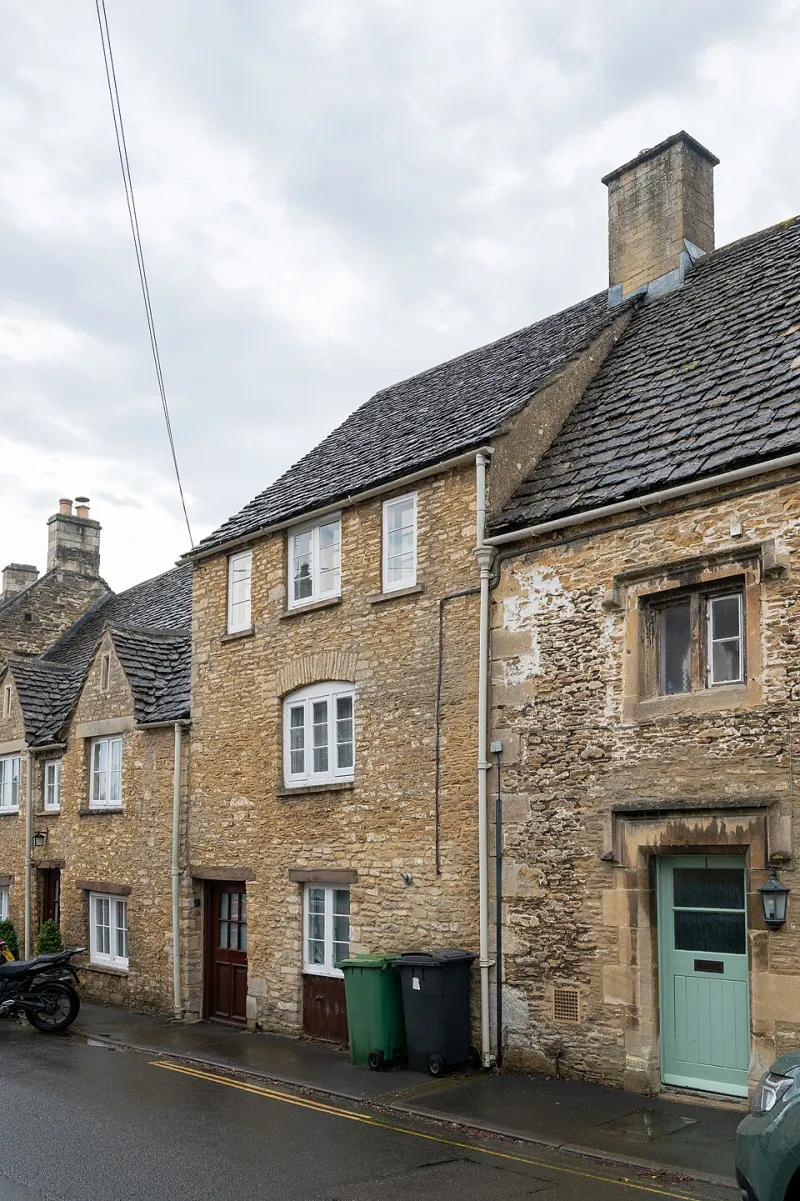
Photo: Tilman2007, CC BY-SA 4.0, via Wikimedia Commons
Most gardens are designed from the far end backwards. The border colour gets weeks of thought. The shed gets a whole weekend and a trip to the timber merchant. And the three metres where the back door lets go of the house — the busiest, wettest, most walked-on part of the entire plot — gets eleven minutes and whatever paving was left over.
We call this the threshold zone: roughly the first three metres beyond the door. Ten feet, if you like old money. It is the only part of the garden that absolutely everybody crosses, every day, in every weather, usually carrying something. Get it right and the garden starts to feel like a room you step into. Get it wrong and it is a slippery slab you shuffle across while juggling a washing basket and trying to remember where you put the key.
Levels before anything pretty
Almost every threshold problem is a level problem wearing a disguise. A single 200mm drop out of a Victorian back door is a small cliff for anyone with a knee that complains, a pushchair, a wheelie bin or a tray of tea. Where there is space, two shallower steps beat one deep one every time: risers around 150mm, goings of 300 to 400mm, so a whole foot lands on the tread rather than the front half of one.
Watch the door swing, too. An outward-opening door needs a landing of roughly 1.2 metres square before the first step, otherwise you are stepping down and backwards at once, which is fine until it is dark and raining. And check the fall. Paving should run away from the house at something like 1:60 to 1:80 — enough to shed water, not so much that it feels like a ramp. If the levels are tight, a linear drainage channel across the threshold is a small piece of engineering that saves a large amount of swearing.
Paving that forgives wet shoes
The test for threshold paving is not how it looks in a brochure. It is how it looks in February with a dog on the lead and a bag of shopping in one hand. Sawn sandstone with a light riven finish is hard to beat: grippy, forgiving of a dropped mug, and it ages into something better than it started. Clay pavers laid in a running bond do the same job with a bit more character. Polished anything can stay indoors.
Loose gravel directly outside the door is a trap. It migrates inside, it makes a mess of a buggy wheel, and it is genuinely awkward underfoot for anyone unsteady. If you want that crunch-and-nothing-else look, use a stabilised or resin-bound gravel so the surface stays firm. It is worth having a slightly larger format slab — a single big landing stone — right at the door, so the transition from carpet to garden reads as a deliberate arrival rather than an accident.
A roof, however small
In this country, the most useful thing you can build just outside a back door is a bit of cover. It does not have to be a grand veranda. A canopy projecting 900 to 1200mm will keep the rain off the step, off the door and off the person fumbling with the lock. A pergola over the first bay does the same job more softly and gives you something to grow a Trachelospermum on.
Two things to think about. First, the prevailing south-westerly: a canopy on the sheltered side will get used, one on the exposed side will just funnel rain down your neck. Second, light. A deep canopy over a north-facing kitchen will turn it into a cave, so keep the projection generous in width and modest in depth, and let as much daylight in as you keep the weather out.
Light that doesn't glare
Threshold lighting is not about drama. It is about being able to see the step. Warm white, around 2700K, mounted low and shielded so you are not staring into a bulb: a downlight under the canopy, a wall light with a movement sensor near the door, a run of small path lights at 300 to 400mm. Keep uplighting away from the house — it flatters a tree and blinds a neighbour — and remember that a light you can switch on from inside is worth ten you have to go out and press.
If you are doing paving anyway, put a duct in. A bit of buried conduit now costs almost nothing and saves you stapling cable to a fence forever.
Plants that don't mind being kicked
The plants closest to the door need to be tough, evergreen where possible, and unfussy about being brushed past by a coat. Sarcococca for winter scent and total indifference. Dryopteris ferns for a shady corner that never quite dries out. Epimedium and hardy geraniums to knit the edges. Hakonechloa spilling over a step, adding movement without asking for much. A Hebe or a compact fuchsia in a pot by the door.
What to avoid: lavender and rosemary right at the threshold, which sulk in wet clay and go leggy in a season; anything thorny where people step backwards; and fragile alpines in small pots that get knocked over by the recycling. If you use pots, go for weight and size, top-dress with gravel to stop the cats and the splashing, and cluster them so they read as one thing rather than six.
The rituals that finish the job
Design is not only hard materials. The threshold works when it holds the small stuff: a boot tray, a hook for the watering can, a lidded bench to sit on while you take your shoes off, a mat that actually grips when wet. A shelf for a mug. A place to put the parcel down.
Stand in your garden tonight, on a wet evening, and count the seconds it takes to get from the door to somewhere you want to be. If it is more than ten, and awkward, that is the real brief. The rest of the garden will follow.