Gravity Is Not the Enemy: Designing a Sloping Garden That Feels Deliberate
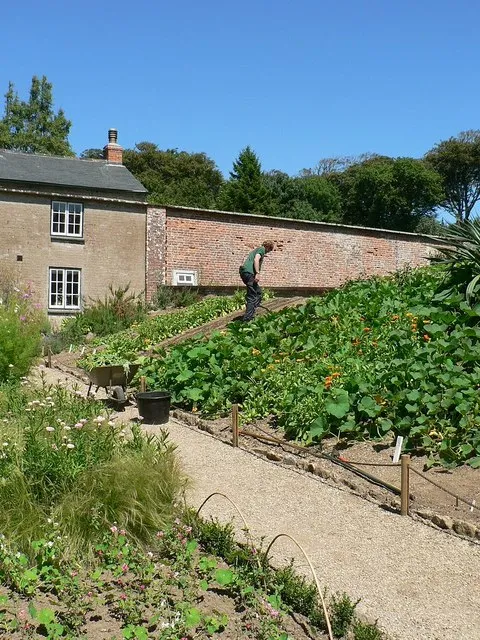
Photo: RichTea, CC BY-SA 2.0, via Wikimedia Commons
A sloping garden can feel like the awkward relative at a wedding: everyone’s pleased to see it, but nobody’s quite sure where to put it. In the UK, plenty of us live with a back garden that falls away from the house, especially in towns built across hillsides from the Cotswolds to the Pennines. The knee-jerk response is to flatten the whole thing. That usually means retaining walls, lorry-loads of spoil and a bill that could have paid for a very nice shed. There is another way. Read the slope, work with gravity, and let the change in level do some of the design work for you.
First, walk the fall of the land
Before you move a single sleeper, spend time on the slope in the rain and in dry weather. Stand at the top and look down. Where does water gather? Where does soil wash away? Which route do your feet naturally take when you carry a cup of tea out to the bottom bench? Those clues matter more than a neat drawing.
The steepest route downhill is the fall line. You do not have to fight it. Paths can run across the slope, gently zig-zagging rather than charging straight down. That simple move slows water, makes the climb easier and gives you planting pockets on either side. A garden that acknowledges its gradient immediately feels less like a problem to be solved.
Terrace or ramp? Ask what you want to do there
Terracing is not automatically the right answer. It is brilliant when you need a flat place to sit, eat, let children play or put a greenhouse. A level pocket outside the back door is often worth the investment, especially if the existing step down is steep and slippery.
But you do not need to terrace the entire plot. Use a ramp or a gently graded path for everyday movement—taking the bins out, wheeling a barrow, getting from A to B without a staircase. Then save the big level change for one or two meaningful spots. A wide terrace halfway down can become a lookout point. A small deck at the bottom can catch the evening sun. The mistake is turning the whole garden into a series of narrow shelves that feel like a fire escape.
If you are retaining more than a low garden wall, get proper advice. In the UK, retaining walls can need building regulations approval and structural design, particularly where they hold back a significant amount of soil or sit near a boundary. It is not the place for guesswork.
Steps are punctuation, not the whole sentence
A long, narrow flight of steps is the quickest way to make a sloping garden feel like a chore. Steps work best in short flights with landings between them. Two to four risers, then a flat breath, then a few more. Make them wider than you think they need to be. A single person can use a narrow step, but two people cannot pass, a watering can catches the edge, and the whole thing feels mean.
Set steps into the slope rather than perching them on top. Use sleepers, stone, brick or paving that matches the house—whatever suits the garden’s age and setting. Mixing materials can look deliberate, but too many different edges become noisy. And do not forget the handrail if the drop is real. A simple metal rail can be elegant as well as useful.
Give water a route before it finds one
On a slope, water arrives with momentum. That is why the bottom corner turns boggy, the mulch ends up on the patio and the neighbour’s fence gets a surprise. Deal with drainage early, not after the planting.
Slow water down with borders, gravel margins, mulch and planted swales. A shallow channel planted with moisture-loving plants can look like a feature rather than a drain. Permeable paving, soakaways and French drains all have their place, but they need to suit the soil. Heavy clay behaves very differently from sandy loam. If the slope sends water towards the house or a boundary, get it assessed properly. A rain garden at the lowest point can turn a soggy corner into one of the garden’s best bits.
Plant for the climb, not against it
Planting can make a gradient feel intentional. Use low, mounded planting at the top so you keep the view. Let shrubs and grasses hold the middle slope, where soil wants to move. Put the thirstiest plants at the bottom, where water collects. Repeat the same few species across the levels so the garden reads as one composition rather than three unrelated plots.
Lawn on a steep slope is rarely worth the mowing. Replace it with groundcover, low shrubs or a meadow-style mix that can be cut once or twice a year. On sunny slopes, try lavender, thyme, sedum and drought-tolerant grasses. In shade, ferns, epimedium and geranium will knit the soil together. Use the risers of steps and the edges of retaining walls as planting pockets—alpine strawberries, trailing herbs or small ferns can soften hard lines.
Make each level mean something
A slope gives you something a flat garden cannot: distinct zones without walls. The top level might be for sitting and looking out. The middle could be a lawn or a productive bed. The bottom might be a wildlife pond, a shed or a vegetable patch. Because the levels are separated by height, each one feels like its own room.
Slope also creates microclimates. A south-facing bank is warmer and drains faster; a frost pocket at the bottom may be cooler and wetter. Use that. Tender fruit, early salads and sun-loving herbs will thank you on a warm slope. Frost-sensitive plants will not enjoy the bottom corner.
Work with what the land is already doing and the garden will feel calmer, more useful and far more interesting than a flattened lawn. Gravity is not the enemy. It is the structure.