Old Bones, New Planting: Making Salvaged Materials Feel Deliberate
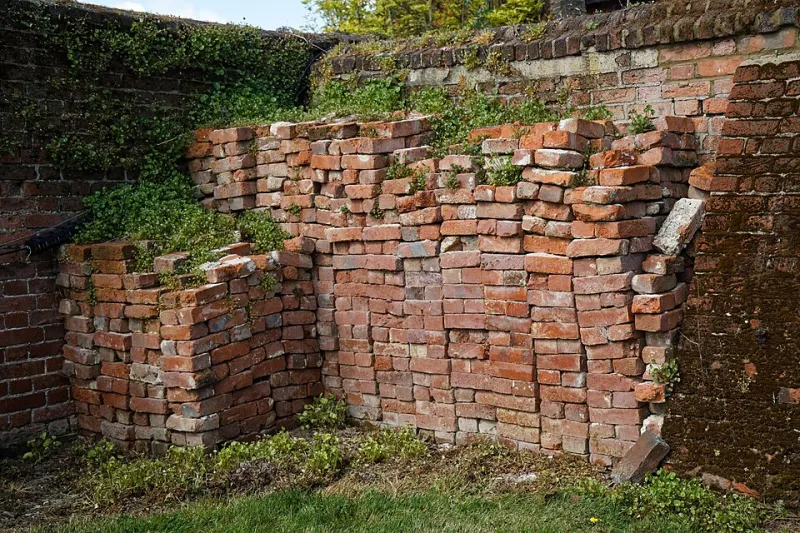
Photo: Acabashi, CC BY-SA 4.0, via Wikimedia Commons
There is a fine line between a garden that feels layered and one that feels like a reclamation yard has been let loose on it. Reclaimed brick, weathered timber and second-hand stone can be brilliant. They bring colour, texture and a sense of history that new materials rarely manage. But they only work when someone has made decisions—about scale, about how the old pieces sit next to the house, and about what is planted around them.
The fusion approach is simple: let the salvaged material supply the texture, then use clean detailing and confident planting to stop it tipping into pastiche. Old bones, new planting. That is the balance.
Start with the house, not the yard
Before you buy anything, look at the building. A Victorian terrace, a 1930s semi, a stone cottage and a modern self-build all want different partners. Reclaimed London stock brick can look wonderful against a period facade, but it can look contrived tacked onto a new-build. In that setting, use old materials as an accent rather than a fake history: a run of weathered brick edging, a single stone trough, a reclaimed oak bench.
Check mortar and pointing too. Soft old bricks need breathable lime mortar, not a hard cement mix that traps moisture and forces it out through the brick face. If you are building a low wall or raised bed, ask whether the brick is frost-resistant and suitable for exposure. Salvaged bricks that have spent decades in a wall may be lovely, but they may also be soft, flaking or too irregular for structural work.
Sourcing without getting stitched up
Reclamation yards, demolition auctions, local marketplace listings and architectural salvage shops are the obvious ports of call. So are garden projects that are being taken apart—sometimes the best stone is already in someone else's garden and about to be skipped. Ask where material came from, how it has been stored and whether it has been exposed to oil, paint or creosote.
Buy more than you think you need. Reclaimed bricks and pavers vary in size, and a few broken pieces are normal. If you are matching a house, take a sample of brick or stone with you. Photographs help, but colour changes in daylight. Check thickness as well as face size, especially for paving. And price the delivery before you fall in love with a pallet of York stone; haulage can double the cost.
The damp and frost conversation
Old materials are porous. That is part of their charm, but it is also the reason they need detailing that lets them breathe. Do not bury timber directly in soil. Set posts on gravel or concrete feet, leave a gap between timber and damp ground, and use air gaps behind cladding. Raised beds made from old sleepers need drainage and a lining that keeps soil away from the timber.
Be careful with old railway sleepers. Genuine creosoted sleepers are not ideal beside edible crops or in small gardens where children and pets are close. New untreated oak or heat-treated timber is often a better choice for beds and seating. For stone, frost damage is the quiet killer. Thin, soft or already-laminated stone will not enjoy a UK winter. Use frost-resistant stone for paving and avoid trapping water in shallow saucers.
Scale is the quiet make-or-break
The most common salvage mistake is scale. A tiny courtyard garden does not need a massive railway sleeper bench, a giant stone trough and three different types of brick. It needs one or two strong pieces and a lot of restraint. Chunky timber can be wonderful, but it should look deliberate, not like it was left over from a car park.
Repeat materials rather than collecting a little bit of everything. One brick, one stone, one timber. Let the planting supply the variety. Clean detailing helps too: a crisp gravel surface, a straight metal edge, a simple shadow gap. The contrast between old texture and neat lines is what makes the fusion work.
Pair old textures with contemporary planting
This is where the garden stops being a salvage display and starts being a garden. Old brick loves airy, see-through planting: Verbena bonariensis, Stipa tenuissima, alliums, salvias. Weathered timber sits beautifully with ferns, hakonechloa and dark-leaved plants that enjoy the shade. Reclaimed stone is a natural partner for silver foliage, thyme, lavender and low grasses.
Keep the planting palette modern if the hard landscaping is old. A matrix of repeated grasses with a few strong perennials will look more considered than a mishmash of cottage-garden favourites. And if the house is contemporary, let the old materials be the only nostalgic note. That is the whole point.
A simple recipe
Pick one reclaimed material as the hero. Add one modern material that contrasts—dark metal, smooth concrete, clean gravel. Then choose a planting palette of no more than five or six repeating plants. A reclaimed stone path, blackened timber bench, gravel margin and repeated grasses can be enough. Old brick edging, a simple oak seat and a run of salvia and stipa can be just as good.
Salvage is not a shortcut. It is an edit. Get the scale right, keep the detailing clean and let the plants do the talking. Then the garden feels layered, not like a yard sale.