Let It Puddle: Turning a Wet Corner into the Best-Designed Part of the Garden
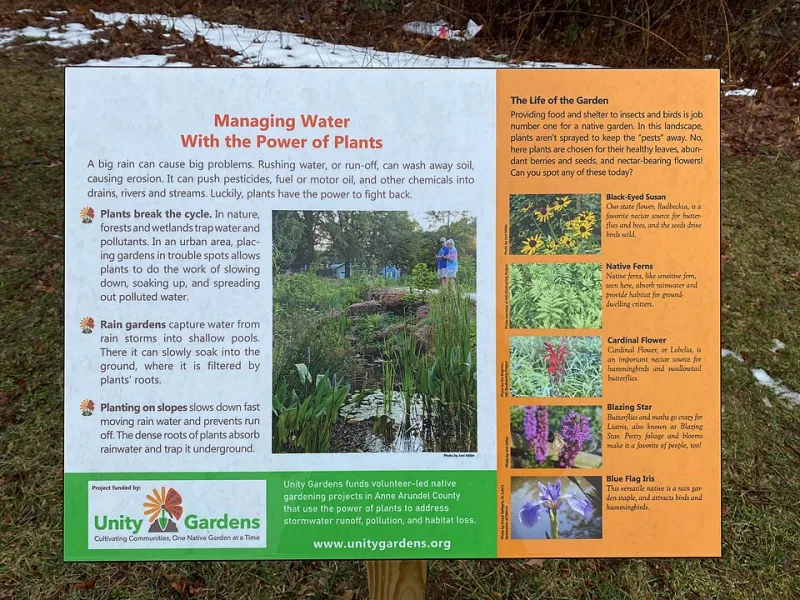
Photo: Geraldshields11, CC BY-SA 4.0, via Wikimedia Commons
Every British gardener has one: the corner that squelches. The lawn edge that turns to soup in November. The paving that holds a shallow lake for three days after a storm. The instinct is to fix it — pipe it, pave it, raise it, pretend it isn't happening.
But here's a thought. Water is going to arrive whether we plan for it or not, and the gardens that cope best with 2026's weather — wet winters, sudden summer downpours, then a dry fortnight in July — are the ones that treat rain as a design material rather than a nuisance. A rain garden isn't a compromise. It's often the most interesting few square metres on the plot.
What a rain garden actually is
Strip away the jargon and it's a shallow, planted depression that catches rainwater running off roofs, paths and drives, holds it for a few hours to a day, and lets it soak away slowly into the ground instead of charging down the drain. You get less local flooding, less water wasted, and a planting palette of bog-loving plants that most gardens never get to use.
It's the domestic end of a bigger idea — sustainable drainage — and it's quietly supported by UK planning guidance for new developments. But you don't need planning permission to dig one in an existing garden. You just need to be thoughtful about where the water goes.
Siting it without creating a problem
A few rules of thumb worth sticking to:
- Keep it at least three metres from your house and further from any neighbour's, and away from retaining walls.
- Don't put it where water already sits and can't escape. A rain garden receives water and drains within a day; a permanently waterlogged hole is a pond, or a drainage problem, or both.
- Check your soil. Sandy and loamy soils infiltrate happily. Heavy clay needs a deeper excavated pit backfilled with grit, sand and compost, plus an overflow route.
- Aim for roughly 5–10% of the area draining to it. A garage roof and a patio might warrant two or three square metres of planting, not a whole border.
- Always plan an overflow. A shallow channel or a gravel-filled trench leading to a lawn or drain saves you a mess in a January storm.
The shape is the design
This is where a rain garden earns its keep visually. Rather than a neat rectangle, think in curves — a kidney, a long shallow scoop, a series of linked basins at slightly different levels. Set a spade depth (roughly 100–150mm) at the centre, feather the edges so it reads as a dip rather than a hole, and mulch generously. Line the base with a little grit or sand if drainage is sluggish.
A dry stone edge, a run of clay pavers or a low timber lip gives the depression a crisp, deliberate outline. Suddenly the thing that used to be an embarrassment looks like a decision.
Plants that actually enjoy wet feet
This is the fun part. Forget the drought-tolerant medley for once and go for plants with presence:
- Structure: Rodgersia with its huge ribbed leaves, Ligularia 'The Rocket' with its black stems and yellow spikes, and the giant rhubarb-ish drama of Gunnera if you have the space and the wet.
- Flowers: Astilbe, Filipendula, Iris sibirica, Caltha palustris for early spring, and Lythrum salicaria for a long magenta summer.
- Grasses and texture: Carex, Molinia, Deschampsia, and ferns — Dryopteris and Osmunda if it stays damp.
- Winter interest: Cornus with red or orange stems, Salix with silver catkins, and the seedheads of everything you didn't cut back.
Plant densely. Bare soil in a rain garden is a weed invitation and a silt trap. A gravel mulch around the edges keeps things tidy and slows the flow.
Paths that let water through
While you're at it, look at where the water is coming from. A solid concrete path is a hosepipe pointed at your lawn. Options that behave better:
- Gravel or resin-bound gravel over a permeable sub-base.
- Clay pavers laid with open joints on a grit base — classic, and it ages beautifully.
- Setts or cobbles with wide, planted gaps.
- Stepping stones through low planting, which slows runoff and looks less municipal than a slab run.
- Timber decking with gaps, or a simple boarded walkway over the soggiest stretch.
Storage, not just drainage
A rain garden is one piece of a water strategy. Add a water butt or two to the downpipes — you'll be grateful in a dry August — and consider a rain chain, a shallow rill along a wall, or a small wildlife pond fed by an overflow. A pond that tops up from your roof is a genuinely lovely thing, and the frogs will move in before you've finished the tea.
The maintenance reality check
Honestly, it's modest. Cut back the perennials in late winter or early spring, keep the inlet clear of leaves in autumn, and check the overflow after heavy rain in the first year. That's about it. No mowing, no watering, no feeding.
And the wildlife dividend is real: damp ground means insects, insects mean birds, and the structure you leave standing over winter gives everything somewhere to hide.
Where to start this autumn
Pick your worst wet corner. Watch where the water actually travels for a week. Then dig a shallow, generous curve, amend the soil, and plant it up in one enthusiastic afternoon. You'll lose a bit of lawn and gain a feature that gets better every time it rains — which, in this country, is a reliable kind of investment.
The garden that handles water well is the garden that still looks composed in February. That's the goal, and it starts with one squelchy corner.