The Three-Material Rule: Why Less Paving, Fencing and Edging Adds Up to More Garden
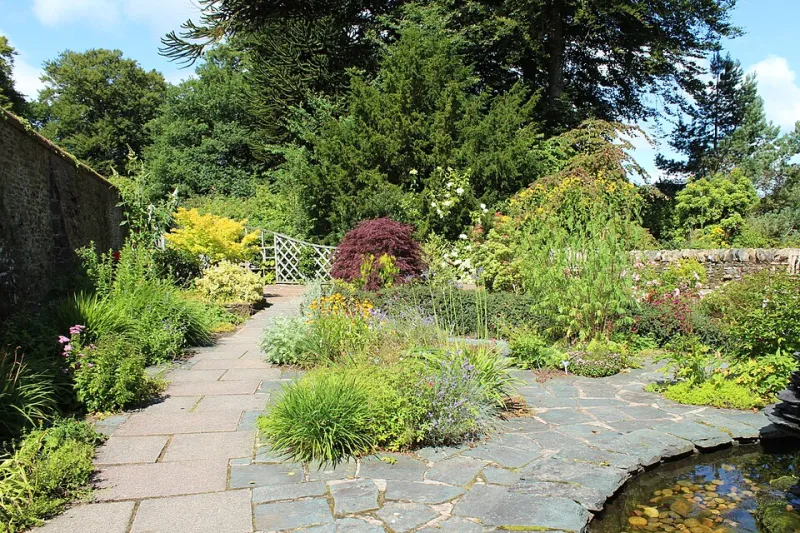
Photo: Billy McCrorie , CC BY-SA 2.0, via Wikimedia Commons
Most gardens do not feel busy because there are too many plants. They feel busy because there are too many hard materials. A strip of brick edging here, a bit of gravel there, a new fence in one finish, a deck in another, and suddenly the garden reads like a list of separate purchases rather than one considered space.
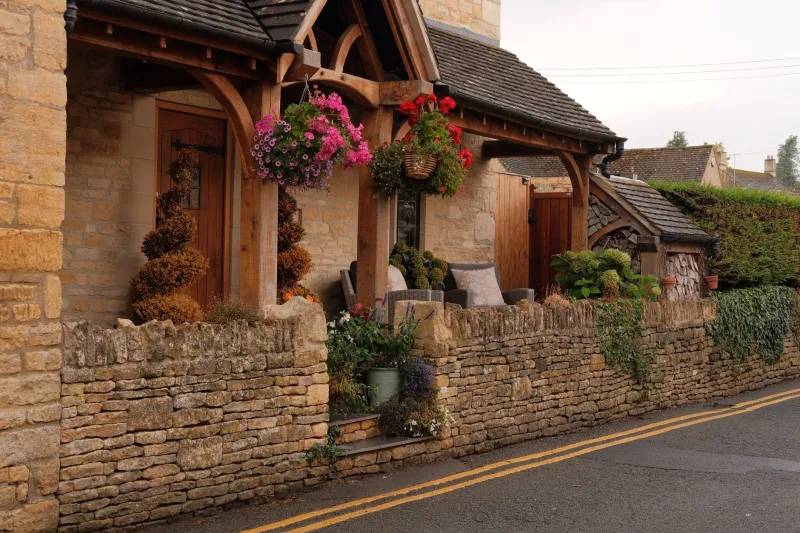
The three-material rule is simple: choose three main hard landscaping materials for the whole garden and let planting do the rest. Stone, timber and one metal is a reliable UK palette. It covers the ground, the boundaries and the details, and it gives you enough variety without turning the garden into a patchwork.
Why three is the useful number
Two materials can feel a bit strict. Four or more usually means something has crept in without being edited. Three gives you a primary surface, a warm structural material and a crisp accent. It is enough to make decisions easier and few enough to keep the garden visually quiet.
The rule is not about being minimal for the sake of it. It is about making each material earn its place. If a new raised bed, path or bin store does not fit the palette, it either gets redesigned or waits. That sounds restrictive, but in practice it saves money and prevents the slow accumulation of odds and ends that makes a garden feel unresolved.
Start with the ground
Paving is the material most likely to create the patchwork effect. In the UK, a garden can easily end up with inherited concrete slabs, a new porcelain patio, gravel around the shed and brick edging along the border. Each element might be perfectly good on its own, but together they compete.
Pick one primary paving material and repeat it where it matters. Porcelain is practical and handles frost and rain well. Natural stone, such as sandstone or limestone, softens beautifully with age, though it needs a little more care with sealing and moss. Gravel can be excellent in a small garden or a relaxed setting, but it works best when it is treated as the main event rather than a filler between other surfaces.
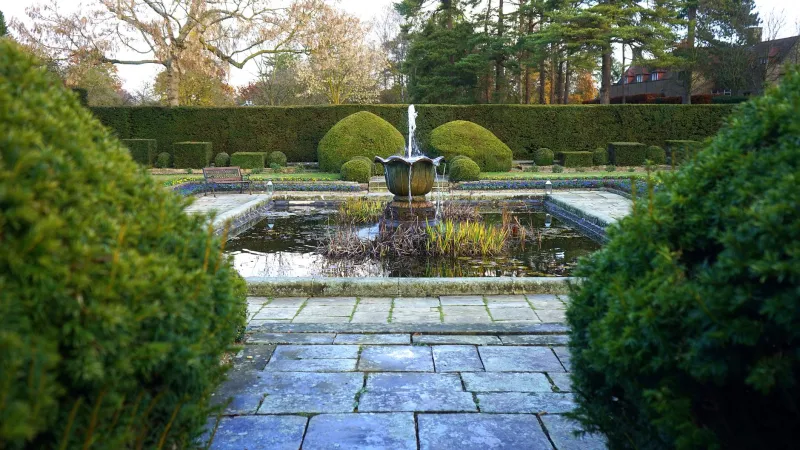
Use the same edging family as the paving, or choose a discreet alternative that disappears. A crisp metal edge can be the exception because it reads as a line rather than a material. The aim is for the ground to feel continuous, not divided into zones by accident.
Let timber do the warm work
Timber is the material that takes the hard edge off a UK garden. Fencing, decking, pergolas, raised beds and storage all benefit from it, but they benefit most when they share a finish. Mixing oak, pressure-treated pine, painted tongue-and-groove and composite in one view is where gardens start to look muddled.
Choose one timber treatment and stick to it for the prominent structures. If you want painted timber, decide on the colour early and keep it consistent. If you prefer natural wood, accept that different boards will weather at different rates and plan for that rather than fighting it. A timber palette does not have to be uniform in tone, but it should feel like one family.
This is also where phasing helps. Build the main structure first — the fence, the deck or the pergola — and let the smaller timber details follow later. A garden that grows in stages can still look unified if the material decisions are made once and then respected.
One metal, used sparingly
Metal is the accent in a three-material garden. It can be an edging, a handrail, a downpipe, a set of railings, a light fitting or garden furniture. The temptation is to introduce black, grey, bronze and galvanised steel all at once because each one looks good in the catalogue. Resist that.
Pick one metal finish and repeat it in small doses. Powder-coated aluminium is low-maintenance and works well for edging and furniture. Corten steel has a rich, weathered look but needs to be handled carefully near planting and paving. Stainless steel is crisp but can feel cold in a domestic garden. Whatever you choose, let it be the sharp note rather than the main chorus.
Planting is the fourth material
Once the hard palette is limited, planting has room to perform. This is the real payoff. When the paving, fencing and edging are not arguing with each other, the borders can carry more colour, texture and seasonal change without the whole garden feeling chaotic.
Think of planting as the material that softens every hard line. A repeated hedge, a run of ornamental grasses, a climber over a timber frame or a few generous shrubs can tie the built elements together. In a UK garden, that softening matters through wet winters and windy springs as much as it does in summer.
The patchwork trap
Most patchwork gardens are not designed that way. They are inherited, added to, repaired and updated over time. A new fence goes up because the old one fails. A path is replaced because it becomes slippery. Gravel is added because it is cheap and quick. Before long, the garden has six materials and no clear visual hierarchy.
The fix is not always to rip everything out. Sometimes it is to unify what is there with a single dominant material, a consistent paint colour or a clever bit of screening. But if you are starting fresh, the three-material rule is easier to follow from day one than to retrofit later.
Phasing without losing the plot
Very few of us build a whole garden in one go, and that is fine. The trick is to phase the purchases without changing the palette. Keep a sample board with a piece of paving, a timber offcut and a metal swatch. Store a few spare paving slabs. Write down the finish names. Then, when you add a bench or a bin store two years later, you have something to match against.
A garden should feel like it belongs to the house and the people who use it. At Fusion Garden Creations, that usually starts with fewer decisions made more carefully. Three materials, chosen for UK weather and repeated with confidence, will almost always look more designed than a dozen materials chosen one at a time.