The View From the Sink: Designing a Garden for the People Behind the Glass

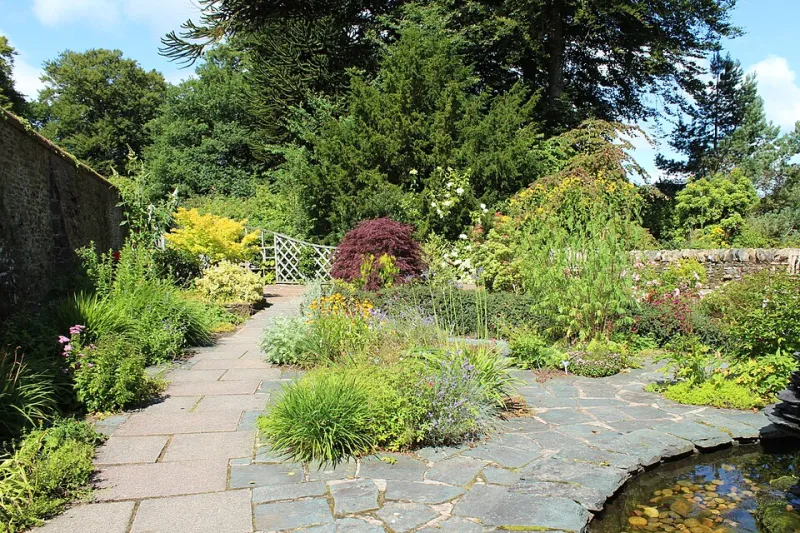
Photo: Charles J. Sharp, CC BY-SA 4.0, via Wikimedia Commons
As I write this in mid-November, my garden is mostly a silhouette. The last leaves are hanging on, the grasses have gone straw-coloured, and the view from the kitchen sink is doing more work than the actual patio. That is not a failure of design. It is the normal British condition. For a good chunk of the year, we experience our gardens through glass — while washing up, eating toast, working at the table or lying in bed listening to rain. So it makes sense to design for that view deliberately, rather than treating it as a happy accident.
This is not an argument for turning the garden into a stage set that only looks good from one angle. It is an argument for adding a second, indoor-first layer to your thinking. The garden still has to work when you step outside. It just also has to earn its place when you do not.
Start with a window audit
Before you move a single plant, spend a week noticing where you actually look. Not where you think you look — where your eyes land while the kettle boils or the television is on. Make a list of the main interior viewpoints: the kitchen sink, the sofa, the dining table, the back bedroom, maybe the landing window or the downstairs loo. For each one, note the height of the view, the direction it faces and what currently dominates the frame. Bin store? Bare fence panel? A lovely bit of sky above a scrappy border?
Take a photo from each spot at the same time each day for a few days. It sounds overly methodical, but it reveals things. A view that feels fine at noon can be gloomy by three o'clock in December. A window that frames a beautiful tree in summer may frame nothing but a soggy lawn in February. Once you have the evidence, you can design for the view that actually exists.
Give each window one job
A common mistake is trying to make every window look at something spectacular. That leads to a garden that feels busy from indoors — all competing focal points and no calm. Instead, give each main view a single clear job.
The kitchen sink view might be about close-up detail: a pot of wintergreen, a clipped box ball, a bird feeder, a small tree with interesting bark. The sofa view can carry the longer composition: a hedge line, a shaped lawn, a path leading the eye out. The back bedroom, looking down, should be designed for the aerial view — bed shapes, path curves and colour blocks read differently from above. The dining table might want scent and low lighting for evenings. None of these views need to be identical. They just need to be intentional.
Build the frame before the filling
The window itself is a frame. What sits immediately outside it shapes the picture more than anything else. A plain rectangle of glass looking onto a flat rectangle of lawn is never going to feel composed. But add a vertical element slightly off-centre — a multi-stem birch, a tall pot, a slim evergreen — and the view gains depth immediately. Add a lower layer of grasses or low shrubs and you have foreground, middle ground and background without doing anything dramatic.
Pay attention to the edges of the view. From indoors, you often see the garden at an angle, not straight on. That means the corner nearest the window matters disproportionately. A messy corner will dominate. A thoughtfully planted corner — even just a fern and a dark pot — will soften the whole frame. If a path or lawn edge cuts across the view, check whether it leads the eye somewhere worth going. If it just stops at a fence, consider redirecting it or softening the end with planting.
Choose anchors that hold the view in winter
Summer is easy. The real test of a window view is January. This is where anchor plants earn their keep. Think evergreens with shape — yew, holly, osmanthus, sarcococca — and plants with winter presence, such as birch, cornus and hellebores. Ornamental grasses are brilliant because they hold structure and movement right through to late winter, especially when backlit by a low sun. Seedheads left standing on perennials do the same job for wildlife and for the view.
Try to place at least one anchor plant where you can see it from your most-used indoor seat. It does not need to be big. A single clipped evergreen in a pot outside the kitchen window can do more for a winter view than a whole border of summer colour. If you want scent from indoors, plant winter honeysuckle or sarcococca near an opening window or door. The effect on a grey February morning is disproportionate to the effort.
Design for the view from above
If you have an upstairs window overlooking the garden, you are designing for a plan view whether you like it or not. From above, the shapes of beds, lawns and paths read much more clearly than individual plants. This is where bold moves pay off: a generous curve, a clear axis, a distinct area of gravel or paving. Clutter is also much more visible from above — a cluster of bins, a stray trampoline, a pile of pots. Screening these from upstairs is often easier than screening them from the patio, because you only need to break the sightline, not hide everything.
Use the upstairs view to check balance. If all the interest is crammed into one corner, the garden will look lopsided from the landing. If a path leads nowhere, you will see it from above even if you do not notice it from the ground. The aerial view is a useful honest critic.
Light the view, not just the path
Outdoor lighting is usually designed for people walking around the garden. But from indoors, the view after dark is often the main event. A few warm, low-level lights can turn a soggy November evening into something genuinely pleasant. Uplight a tree trunk, wash a hedge, or place a small light near a pot so it glows from the kitchen. Avoid harsh security floodlights in the main view — they flatten everything and make the garden look like a car park. Use timers and warm-white bulbs, and angle lights so you see the effect, not the source.
Also consider reflections. At night, an unlit garden becomes a mirror of your own room. That can be fine, but if you want to see outside, a little light outside will help. Just keep it subtle.
Make peace with the weather
A UK garden designed only for dry, sunny days will disappoint from October to April. The window seat standard accepts rain. It chooses plants that look good wet: ferns, hostas, grasses, evergreen structure. It values bark, silhouette and movement over flower power alone. It leaves seedheads up and lets the garden be a bit messy in winter, because that is when the view needs texture most.
By the time the clocks go back in 2026, your garden should have something to offer from the sofa. Not a perfect summer border frozen in aspic, but a view with shape, colour and a reason to look up from your tea. That is the standard worth designing to.
At Fusion Garden Creations, we think a garden should work from the inside out. If you are planning a transformation, start by standing at your sink and looking out. The view will tell you what to do next.